Today, President Obama took questions from the House Republican Caucus, including one from Congresswoman Shelly Moore Capito (WV-02) about coal jobs in West Virginia. The exchange begins around minute 19.
CONGRESSWOMAN CAPITO: Thank you, Mr. President, for joining us here today. As you said in the State of the Union address on Wednesday, jobs and the economy are number one. And I think everyone in this room, certainly I, agree with you on that.
I represent the state of West Virginia. We’re resource-rich. We have a lot of coal and a lot of natural gas. But our — my miners and the folks who are working and those who are unemployed are very concerned about some of your policies in these areas: cap and trade, an aggressive EPA, and the looming prospect of higher taxes. In our minds, these are job-killing policies. So I’m asking you if you would be willing to re-look at some of these policies, with a high unemployment and the unsure economy that we have now, to assure West Virginians that you’re listening.
PRESIDENT OBAMA: Look, I listen all the time, including to your governor, who’s somebody who I enjoyed working with a lot before the campaign and now that I’m President. And I know that West Virginia struggles with unemployment, and I know how important coal is to West Virginia and a lot of the natural resources there. That’s part of the reason why I’ve said that we need a comprehensive energy policy that sets us up for a long-term future.
For example, nobody has been a bigger promoter of clean coal technology than I am. Testament to that, I ended up being in a whole bunch of advertisements that you guys saw all the time about investing in ways for us to burn coal more cleanly.
I’ve said that I’m a promoter of nuclear energy, something that I think over the last three decades has been subject to a lot of partisan wrangling and ideological wrangling. I don’t think it makes sense. I think that that has to be part of our energy mix. I’ve said that I am supportive — and I said this two nights ago at the State of the Union — that I am in favor of increased production.
So if you look at the ideas that this caucus has, again with respect to energy, I’m for a lot of what you said you are for.
The one thing that I’ve also said, though, and here we have a serious disagreement and my hope is we can work through these disagreements — there’s going to be an effort on the Senate side to do so on a bipartisan basis — is that we have to plan for the future.
And the future is that clean energy — cleaner forms of energy are going to be increasingly important, because even if folks are still skeptical in some cases about climate change in our politics and in Congress, the world is not skeptical about it. If we’re going to be after some of these big markets, they’re going to be looking to see, is the United States the one that’s developing clean coal technology? Is the United States developing our natural gas resources in the most effective way? Is the United States the one that is going to lead in electric cars? Because if we’re not leading, those other countries are going to be leading.
So what I want to do is work with West Virginia to figure out how we can seize that future. But to do that, that means there’s going to have to be some transition. We can’t operate the coal industry in the United States as if we’re still in the 1920s or the 1930s or the 1950s. We’ve got to be thinking what does that industry look like in the next hundred years. And it’s going to be different. And that means there’s going to be some transition. And that’s where I think a well-thought-through policy of incentivizing the new while recognizing that there’s going to be a transition process — and we’re not just suddenly putting the old out of business right away — that has to be something that both Republicans and Democrats should be able to embrace.
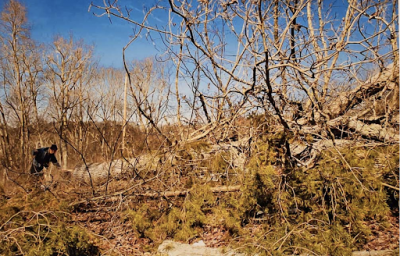
A much publicized tree-sit at the Bee Tree mine on Coal River Mountain has come to an end after nine days. Eric Blevins, 28, and Amber Nitchman, 19, descended from their trees this morning citing concerns from cold temperatures. Read the full press release by Climate Ground Zero.
Representatives from Climate Ground Zero met with West Virignia Governor Manchin today to discuss the harassment of two tree sitters who have halted blasting on Coal River Mountain since last Wednesday.
Eric Blevins, 28, and Amber Nitchman, 19, have occupied trees in the Bee Tree strip mine for the past eight days. The two protestors have been constantly bombarded with air horns, bright lights, and threats from Massey Energy security officials.
A third tree sitter descended and was arrested on day five of the protest.
The meeting follows a statement by Manchin that called for a cease to violence in the coalfields on both sides of the coal debate.
According to CGZ website, the meeting resulted in a temporary moratorium on the use of air horns and flood lights, but the sitters are concerned about other, possibly more dangerous, forms of harassment.
“North-Central W.Va. is Ground Zero for Surface Mine Coal Ash”
The topic of the story in a nutshell is this:
“Mine operators are spreading serious amounts of coal combustion waste in W.Va. before the EPA declares it to be a hazardous material.”
Thanks to investigative research and testing following the TVA coal ash disaster in Harriman, TN., a year ago, it is now common knowledge that coal fly ash (also known as coal combustion waste, or CCW) contains numerous toxic metals such as selenium, mercury and lead, and according to the National Academy of Sciences, “can potentially be harmful to human health or the environment.”
Following a Senate investigation last summer into the properties of coal ash, committee chairperson Senator Barbara Boxer (D-CA) forced Homeland Security to release a list of the most toxic coal ash ponds in the country and is calling for stronger regulations on coal fly ash.
According to Kasey’s article, in the absence of federal regulation states handle the disposal of coal ash differently.
An often pointed but unfailingly polite debate Thursday demonstrated a wide gulf between environmental and coal industry positions on Appalachia’s environmental woes.
Robert F. Kennedy Jr., president of the Waterkeeper Alliance, challenged coal baron Don Blankenship to be honest about the coal industry’s environmental record, especially mountaintop removal mining.
“This is the worst environmental crime that has ever happened in our history,” Kennedy said, advocating an end to MTR and a gradual shift to renewable energy sources. “We all have a moral obligation to stop this from happening.”
Blankenship, chairman of Massey Energy Company, said the issue was one of industry competitiveness in the face of “environmental extremism.”
Stephen Colbert interviewed University of Maryland scientist Dr Margaret Palmer on his show last night. Dr. Palmer was the lead author of the bombshell mountaintop removal study published in the “Science” Journal last week.
Thanks to Joseph E. Lowery of the Atlanta Journal-Constitution, we are reminded today, on this day celebrating the life and mission of Dr. Martin Luther King Jr., that he would have fought against ALL injustices toward minorities, including the construction of coal-fired power plants in the poor minority communities across the south.
Lowery writes: “We are all grimly aware that inequality and discrimination remain potent in all walks of life, from job pay to matters of common decency. But too many are unaware of the injustice placed on low-income communities and people of color in rural areas.”
Here are other excerpts from Lowery’s full article:
“‘When machines and computers, profit motives and property rights are considered more important than people, the giant triplets of racism, militarism and economic exploitation are incapable of being conquered,’ King preached in a 1967 sermon in Atlanta.”
“Georgia doesn’t need to be the last irresponsible place on earth choosing coal. As Genesis reminds us, we must all rise to the challenge of thoughtful stewardship of what has been entrusted to us, to care for ‘the fish of the sea ... the birds of the air ... the cattle, and all creatures upon earth.’”
The guidelines, hammered out over the past year by federal and state regulatory officials, environmentalists and coal-industry representatives, call on coal operators to place more “spoil” material disrupted by mining — such as dirt and rock — back on the mine sites, instead of dumping it into valleys and stream beds. They are already in effect.
Though the guidelines aren’t mandatory, mine operators are expected to follow them because the state and federal agencies that issue permits for surface mining are part of the agreement and will base their permit decisions on it, said Linda Potter a spokeswoman for the state Department of Natural Resources.
The state is encouraging coal companies to use the new guidelines, but it’s not mandatory. However, federal agencies that have authority over some aspects of permit applications are requiring the use of the new practices, so as a practical matter, coal companies will use them, FitzGerald said.
And here is the response from Kentuckians for the Commonwealth:
There is an important new protocol now in place for lessening the amount of toxic mining wastes dumped into streams. If enforced, it could help reduce significantly the destruction of our waterways. That is a good thing,
Titled the “fill placement optimization process” the document establishes a protocol (it reads largely like an engineering paper) for determining the amount of mining waste and where it should end up — first on the site being mined, then on adjacent abandoned mines and possibly in upper valley elevations (above stream level). It potentially diverts mining wastes from streams but does not ban dumping into streams. Basically, it establishes a possible protocol for enforcing existing law.
That’s the rub: state officials could (and should!) have been enforcing these laws all along had they chosen to do so. And the industry could have been obeying these laws. Instead, state officials have routinely granted waivers of the stream buffer zone (165 waivers out of a total of 251 new permits issued in 2005 and 2006) and reclamation laws. There is no evidence that they will not continue to do so, and this “new” policy — which the state is “encouraging” coal companies to follow — means nothing if the state and federal agencies are not going to require it. There are still plenty of loopholes.
That’s why the Stream Saver Bill and the Clean Water Protection Act are still needed. Coal companies should be prevented by law from filling our streams with their toxic wastes, not just “encouraged” to do so.
And given the Science journal study cited in our January 7 blog post, an outright prohibition of mountaintop removal and valley fills is the only real guarantee that our streams (and land and forests and people) will be protected and preserved.
We applaud the efforts of Tom FitzGerald and the Kentucky Resources Council to move the enforcement agencies a step closer to real enforcement of the law. Now it is up to enforcement officials to prove there will be action behind these words. Kentucky Resources Council to move the enforcement agencies a step closer to real enforcement of the law. Now it is up to enforcement officials to prove there will be action behind these words.
Mountaintop removal coal mine in Floyd or Magoffin County Kentucky by Kentuckians For The Commonwealth, on Flickr
We are excited to announce that the Forum on the Future of Energy, where Waterkeeper Alliance President Robert F. Kennedy, Jr. will debate Massey Energy CEO Don Blankenship, will be an online, interactive event.
Find out the latest news about the January 21, 2010 event and how you can participate by following us on Twitter and The Dirty Lie fan page on Facebook.
The Office of Surface Mining Reclamation and Enforcement (OSMRE) is charged with enforcing the law on mountaintop removal. Unfortunately, decades of rollbacks and giving in to coal industry corruption have left coalfield communities virtually undefended. Exceptions to the surface mine law have become the rule, and problems with dust, blasting, toxic water and giant wastelands remaining unreclaimed are impacting the lives of thousands across the coalfields.
The OSMRE is asking for advice on how to enforce the law - and we need you to offer it. (link to website) Comments are due by January 19th - please click here to send in sample comments or offer your own. Many of you have had personal experiences with the OSMRE - and we encourage you to write about them.
When the OSMRE doesn’t hear from citizens, they assume you have nothing to say - please let them know we are paying attention and we expect the laws to be enforced.