Wednesday, July 01, 2009

EPA Releases the Toxic 44 (coal fly ash ponds you WON’T take home to mama)

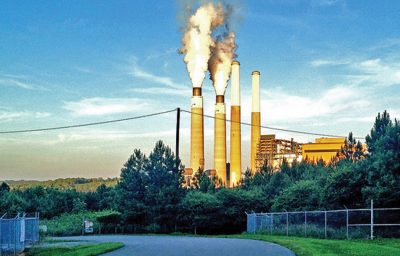
The damaged coal fly ash pond at the Kingston coal-fired power plant in Harriman, TNThe EPA yesterday finally released a list of 44 coal fly ash waste sites with high hazard potential, over-ruling attempts by the Army Corps of Engineers to keep the list of high hazard dams private.

More than half of the coal waste ponds on the list are located in just three Appalachia states: twelve in North Carolina, four in West Virginia, and seven in Kentucky.

Members of Congress, lead by Senator Barbara Boxer (D-CA) strongly criticized containment methods for coal fly ash following the TVA ash spill in Harriman, Tennessee last December. Boxer has continually pushed for stronger over-site of fly ash as a hazardous waste product, and successfully fought the recent order by the Department of Homeland Security and the Army Corps of Engineers to keep the 44 most toxic sites under wraps for security reasons.

”We are pursuing whether the handling of these sites is consistent with the handling of other similar facilities, because of the critical importance of the public’s right to know about threats in their communities,” Senator Boxer said in a press conference June 12. “If these sites are so hazardous and if the neighborhoods nearby could be harmed irreparably, then I believe it is essential to let people know.”

“Coal combustion waste is subject to very limited regulation - in fact, there are stronger protections for household garbage than for coal ash across the country.”

Friday, June 12, 2009

TVA Coal Ash Disaster on CNN tonight

CNN - Anderson Cooper 360 - Friday 6/12/09 - 10:00 p.m. segment Eastern Time - TVA Coal Ash Disaster

http://lifeonswanpond.livejournal.com/55502.html

Tuesday, June 09, 2009

PLEASE CALL CONGRESS: We should regulate Coal Combustion Waste

A coalition of 109 organizations, including Appalachian Voices and the Environmental Integrity Project, is pushing back against Congressmen who do not want to regulate the disposal of coal combustion waste.

Please call your Congressperson and ask him/her not to sign on to letters sponsored by industry that seek weak CCW ”guidelines” that skimp on environmental protections.  See below for more details

Urgent response needed – please help us prevent special interests from stalling our efforts for enforceable regulation of coal combustion wastes (CCW):

Congressional leaders, including PA Congressman Tim Holden, are circulating “Dear Colleague” letters seeking to maintain the status quo for disposal of toxic coal combustion wastes (CCW).  Industry lobbyists are working hard to convince lawmakers that federal CCW “guidelines,” rather than national disposal standards, are all that is needed to protect human health and the environment:  they say current state regulations of coal combustion wastes are “adequate.”

Following the TVA Kingston fly ash disaster, we know otherwise— CCW is toxic, and states are turning a blind eye to regulatory controls in an effort to preserve the so-called beneficial use status of these wastes.

Don’t be fooled—the status quo of patchwork state regulations may save the utility companies money, but it does little to safeguard humans or the environment, particularly our water sources, from the hazards posed by arsenic, mercury, chromium, selenium, and other CCW constituents.

The US EPA’s 2007 Risk Assessment found that communities closest to CCW impoundments can have a 1 in 50 risk of cancer: that’s 2,000 times higher than threshold beyond which the EPA deems any cancer risk to be unacceptable—1 in 100,000.

And, the prestigious National Academy of Sciences (NAS) concluded that current state practices of calling the wastes “beneficial” did not prove their safety.  The NAS recommended a federal regulatory standard and much more scientific studies.

Please join us by calling your Congressperson and asking him/her not to sign on to letters sponsored by industry that seek weak CCW ”guidelines” that skimp on environmental protections.  Please ask them to, instead, support the following principles:

  • Consistent and enforceable federal regulations, not guidelines, are needed to prevent coal ash disasters like the TVA spill and more insidious, but no less dangerous and on-going releases.
  • Enforceable federal regulations can simultaneously promote coal ash recycling and protect the public and environment from toxic leaching from coal ash.  Federal law already allows the EPA to distinguish between waste disposal and beneficial re-use of wastes. Following this precedent, the EPA can regulate coal ash as a hazardous waste when disposed in a landfill, but as a non-hazardous product when it is safely recycled.  EPA has made these distinctions many times before without damaging the market for recycled products.
  • The cost of implementing safe standards is marginal.  In 2000, the EPA estimated that the cost of compliance with tailored hazardous waste regulations would be about $1 billion, annually – just 0.4 percent of utility industry sales.  In a 2005 report, EPA reduced this cost estimate to $521 million for comparable standards.  Even industry estimates of $5-6 billon is reasonable in light of the high risk posed by the waste.

Find your Congressional Members and their phone numbers by clicking on the following link – listing is by state:

http://www.gpoaccess.gov/cdirectory/browse-cd-aug08.html

Thanks for making these important calls – and for sharing this action alert with your friends, family and colleagues!

Lisa Graves Marcucci
Environmental Integrity Project
PA Coordinator, Community Outreach
412-897-0569

Wednesday, January 07, 2009

Funds Urgently Needed for Heavy Metal Screenings After TVA Spill

Though the T.V.A. told residents of Harriman, TN that their drinking water was safe following the December 22nd spill, and backed up their claim with the results of water quality testing conducted at the Kingston water facility intake (a site six miles from the spill site, and approximately half a mile upstream of the ash flow on the Tennessee River), the results of preliminary tests conducted by the Upper Watauga Riverkeeper and partners from Appalachian State University indicate TVA’s data does not tell the whole story.

United Mountain Defense volunteers, who have been working with affected community members since the disaster occurred, have reported talking with several people who have become ill since the spill. Many residents reportedly drank potentially contaminated groundwater out of wells and springs for days following the spill.

The widespread reports of sickness are not necessarily surprising in light of the recently released data from Appalachian Voices, which showed arsenic levels at 30 to 300 times maximum drinking water limit in samples taken near the spill site. In addition to arsenic, eight other heavy metals were found at raised levels in all samples.

50 residents, concerned about their health, wish to be screened for heavy metal exposure.

Though essential to determining whether exposure to heavy metals has occurred since the spill, these tests are unfortunately very costly, and must be done within a short window of time. After only 27 days, evidence of heavy metals leaves the system.

Faced with damaged homes and lost property values, many residents cannot afford the $500 of up front costs the clinic requires to conduct a full screening. To cover the cost of these tests, a total of $25,000 needs to be raised in a matter of days.

On behalf of the residents of Harriman, and the work of United Mountain Defense, we ask that you consider donating to help subsidize the cost of these tests. The money is needed NOW, so that these tests can be done for as many affected people as possible as soon as possible, before the window closes.

Donations can be sent to United Mountain Defense through their PayPal account

Tuesday, December 30, 2008

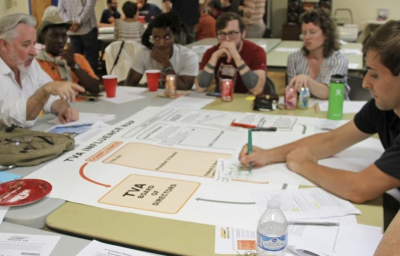
The Board Members of the Tennessee Valley Authority

The nine-member TVA Board of Directors sets policy and strategy for TVA. The members are nominated by the President and confirmed by the U.S. Senate to serve five-year terms.

Their next board meeting is February 12 in Bristol, TN.

Board members are…

Read More...

I Love Mountains.org Launches Comprehensive Web Section on TVA Spill

iLoveMountains.org, a coalition fighting mountaintop removal coal mining, of which Appalachian Voices is a partner organization has launched a comprehensive section of information including links to news, blog posts, photos, and videos of the event as well as detailed information about coal fly ash, historical accounts of other similar incidents, and personal accounts of the current event.

Visit ilovemountains.org/tvaspill.

Coal wastes contaminate hundreds of sites in US

When the Environmental Protection Agency decided not to regulate coal fly ash in 2000, saying the materials were “non-hazardous,” environmental scientists were aghast, since many coal waste storage facilities had already appeared on toxic waste “superfund” lists and many others were eligible. 

By 2007, EPA admitted there was a problem, saying coal waste and fly ash have probably damaged drinking water around at least 135 sites nationwide.  Some of the site damage had been known to exist for over 10 years.  The problem sites include the Kingston TN plant, location of the Dec. 22, 2008 catastrophic release. 

The risk assessment was cited in a New York Times article Dec. 30 as detailing a long list of toxic and hazardous chemicals residing the the coal ash pile in Kingston, including 45,000 pounds of arsenic, 49,000 pounds of lead, 1.4 million pounds of barium, 91,000 pounds of chromium and 140,000 pounds of manganese. 

But EPA assessment should have covered even more sites, according to the environmental group Earthjustice, which also criticized the agency for deliberately “reducing the number of proven damage cases by creating a test of proof that is extremely difficult to meet.”

Serious environmental damage is typical around the hundreds of coal fly ash and combustion waste storage plants located near coal fired power plants.  The emerging picture is one of a lack of any precautions such as landfill liners or even basic monitoring of water quality....

Read More...
Sunday, December 28, 2008

Waterkeepers and Appalachian Voices take water samples at TVA spill

Environmental organizations teamed up Saturday to take water samples along the embattled Emory river despite attempts by authorities to keep them away. 

John L. Wathen, a Hurricane Creekkeeper; Sandra Diaz, Appalachian Voices’ National Field Coordinator; and Donna Lisenby, the Watauga Riverkeeper, used kayaks to access the Emory River and the site of the Kingston Steam Plant spill.  The three navigated two kayaks to take samples and photos among mounds of “ash bergs.”

Results of the independent sampling should be available in three or four days, Lisenby said. 

A selection of photos is available immediately for use with appropriate credit (By John Wathen, Hurricane Creekkeeper) The photos are copyrighted but offered without charge as a public service for environmental groups, web bloggers, and the news media. 

The photos and videos show a broad swath of river turned into a moonscape of ash bergs and thick seams of floating scum.

Read More...
Saturday, December 27, 2008

Appalachian Voices visits ground zero

Appalachian Voices’ National Field Coordinator Sandra Diaz and the Watauga RIverkeeper Donna Lisenby visited ground zero of the TVA coal fly ash spill in Harriman, TN, today, kayaking into the area hardest hit and taking water samples for independent study. Below are Sandra’s updates by cell phone using the Twitter service:

# Uploaded a few more pics, more to come, plus video #coalash http://is.gd/dHd6 4:48 PM Dec 27th, 2008 from web

# We made it out alive! cops everywhere- on land, on water, in the air 2:36 PM Dec 27th, 2008 from txt

# We got busted! more later 1:47 PM Dec 27th, 2008 from txt

# Cops yelling @ us 1:35 PM Dec 27th, 2008 from txt

# We r where it all blew out...islands of sludge 1:21 PM Dec 27th, 2008 from txt

# Looks like they r puttin in a boom. finally! 12:50 PM Dec 27th, 2008 from txt

# Big machines ahead… can we get thru? 12:46 PM Dec 27th, 2008 from txt

# We just did our 1st water sample 4 ny times! 12:15 PM Dec 27th, 2008 from txt

# We r being recorded by ny times! 12:05 PM Dec 27th, 2008 from txt

# Water looks like marble...gross! 11:57 AM Dec 27th, 2008 from txt

# ny times is here, about 2 get on the water! 11:47 AM Dec 27th, 2008 from txt

# We r on water! 11:43 AM Dec 27th, 2008 from txt

# We found our loading dock. hopefully tva wont see us 11:31 AM Dec 27th, 2008 from txt

# heading off the get on the water to take pics and take water samples 10:55 AM Dec 27th, 2008 from web

# Figuring out our P of A using Google Earth...love the Google! 10:30 AM Dec 27th, 2008 from web

# Reporter from NPR Weekend Edition (Sunday) came and went. Hopefully she will be able to get into the affected area. 10:21 AM Dec 27th, 2008 from web

# will be posting my pics as I can here: http://is.gd/dHd610:13 AM Dec 27th, 2008 from web

# We have reached the hq @ a secret undislosed location in kingston, tn 9:39 AM Dec 27th, 2008 from txt

# 13 miles outside of kingston...no sign of the environmental disaster coming up 8:55 AM Dec 27th, 2008 from txt

# On the road 2 biggest coal sludge disaster in us 6:37 AM Dec 27th, 2008 from txt

United Mountain Defense video from TVA spill

Folks from United Mountain Defense took a small boat up the Emory River and into ground zero of the Kingston Steam Plant coal ash spill.

Size of TVA spill is three times initial estimates, officials admit

A coal ash spill in eastern Tennessee that experts were already calling the largest environmental disaster of its kind in the United States is more than three times as large as initially estimated, according to an updated survey by the Tennessee Valley Authority.

As reported in various news media, including the New York Times, officials at TVA initially said that 1.7 million cubic yards, or 240 million gallons of wet coal ash, had spilled into the Emory and Clinch rivers following the breach of an earthen retention pond at the Kingston Steam Plant in Harrington, TN. But on Thursday, the TVA released news that the flooded region contained 5.4 million cubic yards, or over 1 billion gallons of coal sludge–enough to flood more than 3,000 acres one foot deep.

The amount now said to have been spilled is larger than the amount the authority initially said was in the pond, 2.6 million cubic yards.

Read the full New York Times article...

Friday, December 26, 2008

App Voices takes flyover of TVA spill

Written by Harvard Ayers
Founding Board Member, Appalachian Voices

Yesterday, Christmas, December 25, 2008, around 4:30 PM, I flew over the fly ash spill at the TVA Kingston Coal Plant located on Interstate 40, about 30 miles west of Knoxville, Tennessee. The pilot of the flight was Jim Lapis of SouthWings flying service from Bristol, Virginia, and the photographer was Dot Griffith of Banner Elk, North Carolina.

The spill was easily visible, covering hundreds of acres a few hundred feet east of the two huge Kingston plant smokestacks. The spill occurred early Monday morning, December 22, and appears as huge piles of fly ash muck sticking above the waters of the Emory River.

Two houses near the lake’s edge and perhaps 1000 feet east of the smokestacks sit mired in 5-10 feet of the muck. The high water (muck) line is visible in the accompanying photographs taken by Griffith, indicating that the larger of the two houses was under as much as 8 feet of the muck. It is difficult to tell with the smaller house, which is south of the larger one, as so much of it is submerged…

Read More...

How Dangerous is coal fly ash?

Coal fly ash contains many toxic, carcinogenic and poisonous substances that are particularly dangerous in aquatic ecosystems. 
Most fly ash and coal combustion residue (CCR) is sent to landfills or abandoned mines. In some cases, such as the TVA Kingston plant, it is kept on site. 
( Althought there are “green” or “beneficial” uses for coal fly ash, these involve mixing it with cement, stabilizing it and keeping it away from groundwater. Only about 43 percent of coal fly ash nationwide is stabilized in this way. )
Scientists have long known that big trouble can result when coal fly ash comes in contact with aquatic ecosystems or ground water tables. 
“The presence of high contaminant levels in many coal combustion residue leachates may create human health and ecological concerns,” the National Academy of Sciences National Research Council said in a 2006 report. Coal combustion residues are about sixty percent fine aluminum silicate glass compounds and most of the rest are quartz, lime, magnesium, iron and other compounds, according to the NAS study.  Other constituents of CCR can be very dangerous.  Fly ash contains many Class 1 (proven) carcinogens.  For example, fly ash contains 43 parts per million of arsenic, a known carcinogen.
Arsenic, thallium, antimony, molybenum, lead and cadmium—in that order—pose the largest cancer risks, EPA said in a 2007 risk assessment report.

Read More...
Wednesday, December 24, 2008

Citizen Journalists Encouraged to Report on TVA disaster

Citizen journalists are encouraged to register at this blog site and describe their experiences with the TVA disaster. (Photos by Tennessee Green).
Just follow the simple registration procedures and write text and reference photos and videos. 
Please write with questions: 
Thanks— Bill Kovarik

Injury reported as TVA waits for water test results

At least one man may have been hospitalized from drinking tainted water in the TVA coal fly ash spill, witnesses said.

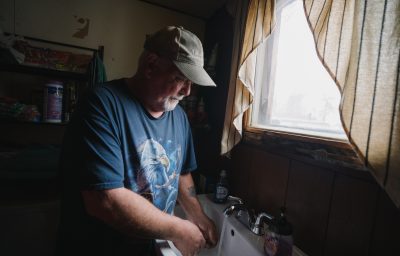
“We met a man who had been vomiting for the past 12 hours after drinking a couple of pots of coffee made from the tainted water,” said Matt Landon of United Mountain Defense, a Knoxville TN based environmental organization.  “We advised him to go to the hospital.”

Members of United Mountain Defense also said TVA had been advising residents to boil water.  This procedure would only concentrate heavy metals, experts noted.  The UMD team traveled Tuesday to Harriman, TN to learn more first hand about the impacts of the coal ash pond failure. 

Meanwhile, TVA waited for water test results before deciding what to do about the massive coal fly ash spill, creeping towards the confluence of the Clinch and Tennessee Rivers near Kingston, TN.  According to a New York Times story this morning, environmental officials are struggling to “assess the damage in hopes that water supplies were not harmed by heavy metals like lead, mercury and arsenic.”

Read More...
Page 1 of 2 pages  1 2 >